



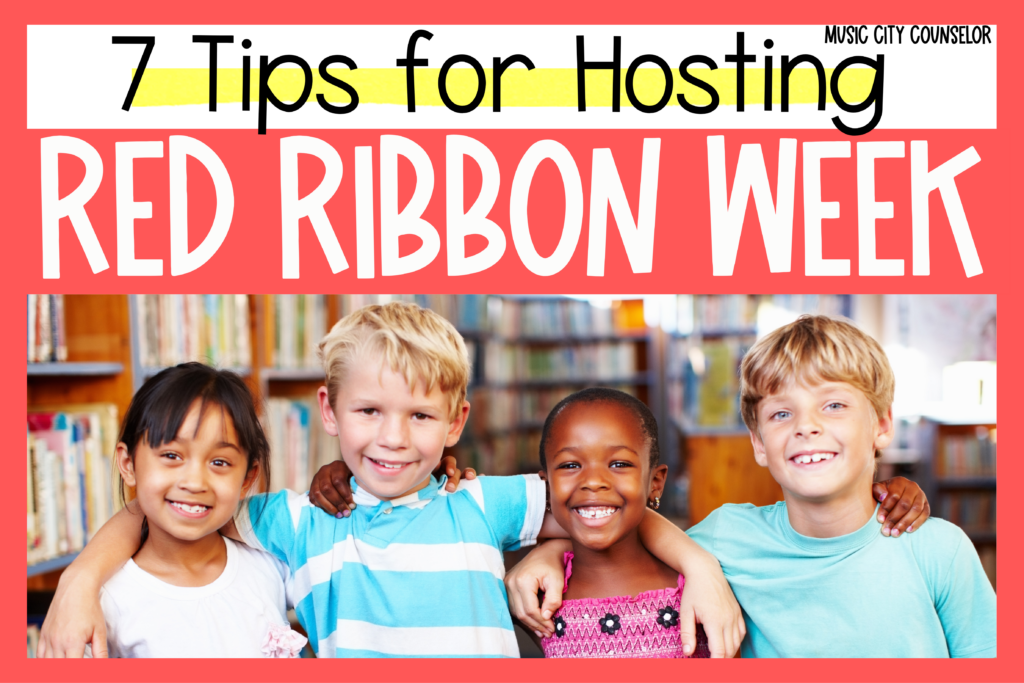
Planning Red Ribbon Week in an elementary school can feel a little tricky!
You want to share an important message about making healthy choices, but conversations about drugs and substances can feel too big for your little learners.
So, how can we make the week meaningful while keeping our lessons simple, helpful, and age-appropriate?
Start with what kids can understand and practice: caring for their bodies, recognizing safe and unsafe choices, identifying trusted grown-ups, and asking for help. These everyday skills give students something practical to take away from the week.
And, of course, there’s plenty of room for fun! Picture books, puppets, role-plays, movement breaks, and hands-on activities can help bring these lessons to life. We want students to leave feeling confident and supported, knowing they have people who can help them and tools they can use.
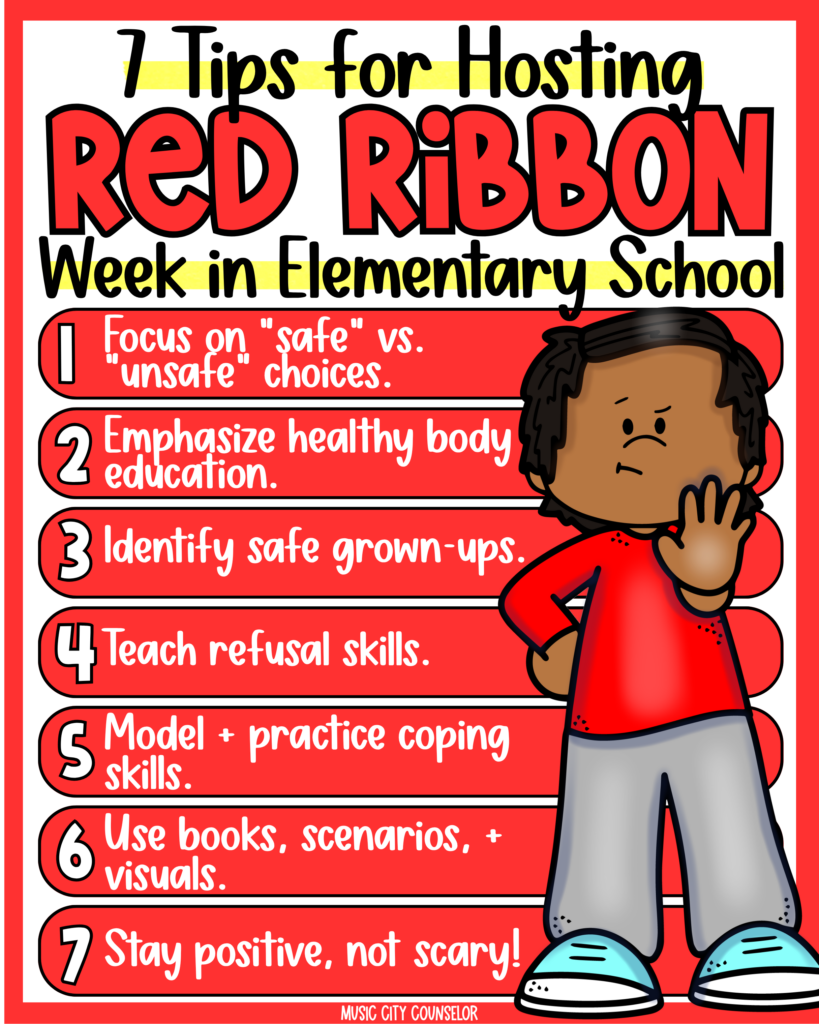
To help you and your students make the most of Red Ribbon Week, here are 7 of my best tips. Read on to learn more about each one!
Young children don’t need detailed descriptions of substances or frightening stories to begin learning about safety. In fact, this can do more harm than good!
Instead, start by teaching your students that their #1 most important job is to keep themselves safe. This means using their brain, heart, and voice to make smart choices.
This presentation and sorting game teach students that important message, along with my 12 safety rules. They focus on personal safety, safe grown-ups, stranger danger, child abuse prevention, online safety, fire safety, safety drills, and more!
To reinforce the material, spark meaningful discussion, and check for understanding, close the lesson with my safe vs. unsafe choices sorting game:
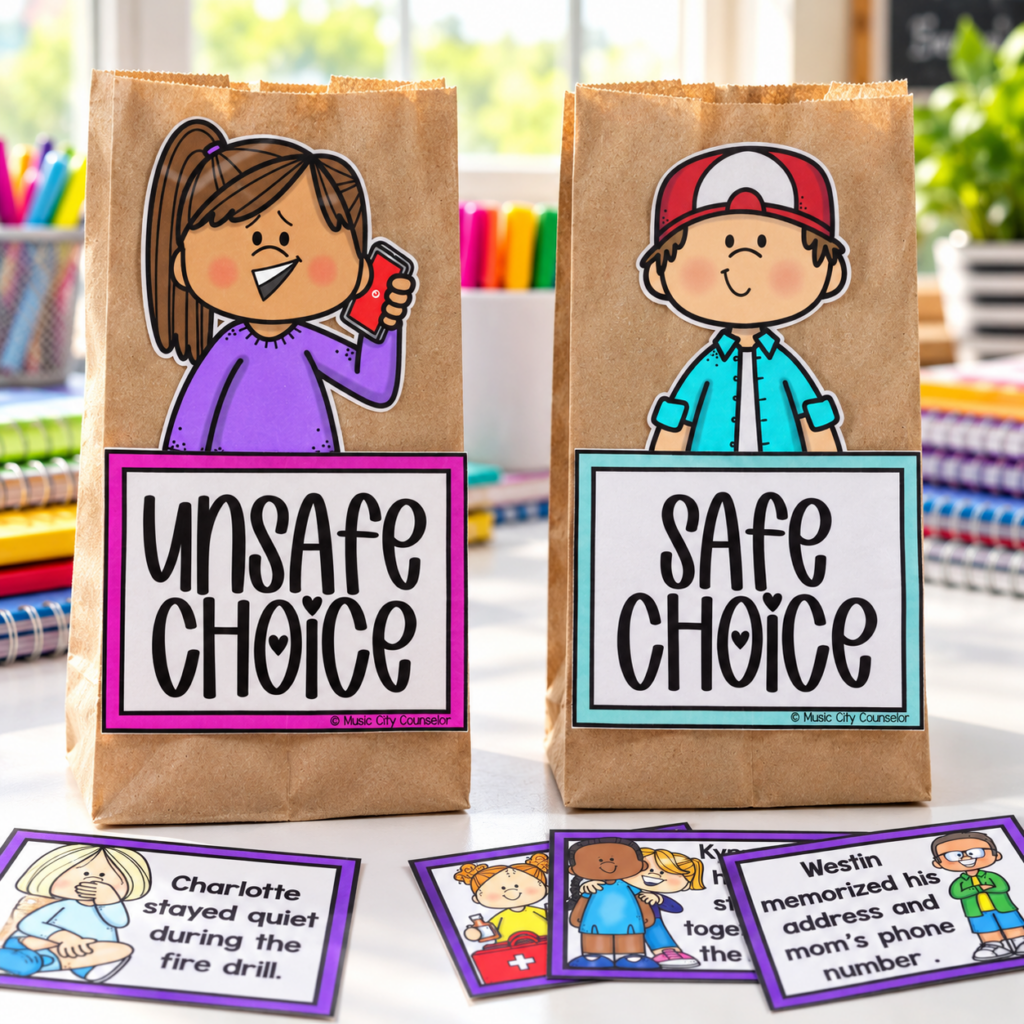
To play, students take turns choosing a scenario card, reading it aloud to the class, then sorting it in the appropriate bag. It’s simple, straight-forward, and age-appropriate…perfect for Red Ribbon Week (and all year long!)
Red Ribbon Week is great opportunity to help children appreciate their bodies and practice caring for them.
Keep the explanations simple:
“Our lungs help us breathe. Our hearts pump blood through our bodies. Our brains help us think, learn, and move.”
Then, connect these body parts to everyday habits. Talk about getting enough rest, drinking water, eating healthy foods, moving in ways that work for our bodies, and telling a grown-up when something hurts or feels uncomfortable.
Ask students:
“What is something your body helps you do that you enjoy?”
You might hear answers like dancing, drawing, playing with a friend, or giving a hug. Use those responses to make the lesson personal:
“Our bodies help us do so many things! Let’s practice ways to care for them.”
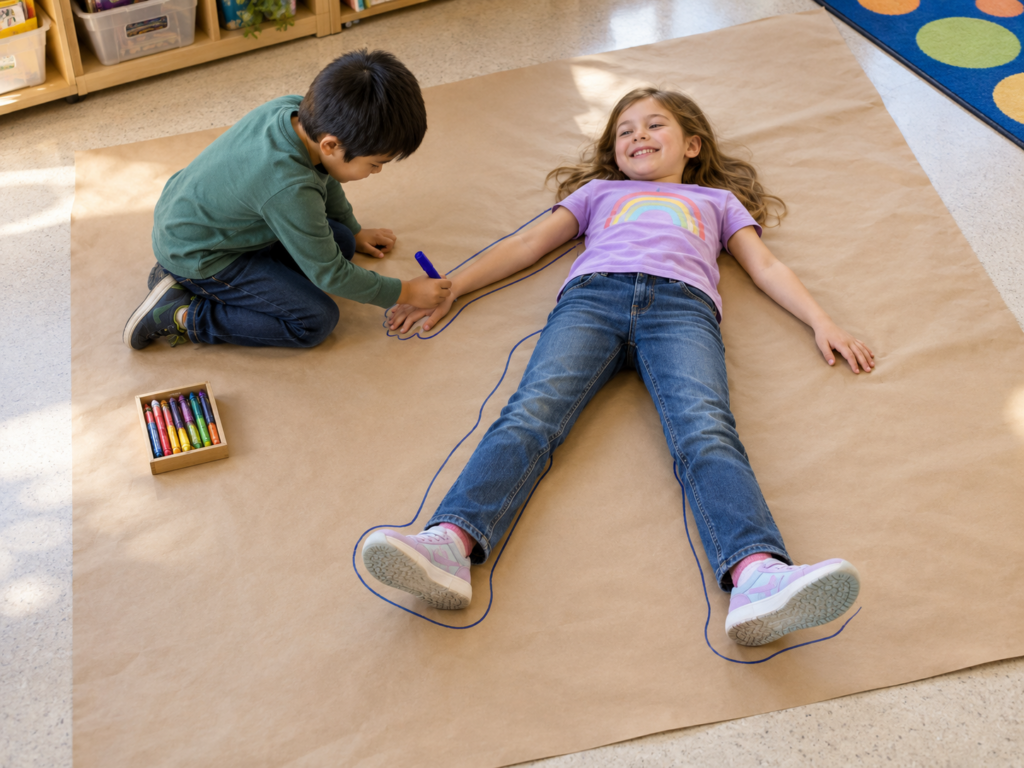
To continue this conversation, roll out some butcher paper and invite students to create a life-size picture celebrating all the wonderful things their bodies help them do! Students lie on the paper while an adult (or friend) traces around them (with their permission). Offer a ready-made outline or a smaller paper version for anyone who prefers it.
Next, let students decorate their outlines with crayons and markers. As they draw, encourage them to think about what they appreciate about their bodies: “My ears help me enjoy music!” “My arms help me hug my dog!” “My brain helps me imagine new things!” Remind students that our bodies work in different ways, and every body deserves care and kindness.
Then, ask: “How can we take care of our amazing bodies?” Invite students to draw or write self-care ideas inside or around their outlines. For example:
Wrap up by inviting each student to choose one way they’ll care for their body this week.
We often tell students to “ask or tell a trusted adult” when big problems come up, but don’t always slow down to help them identify who these people actually are.
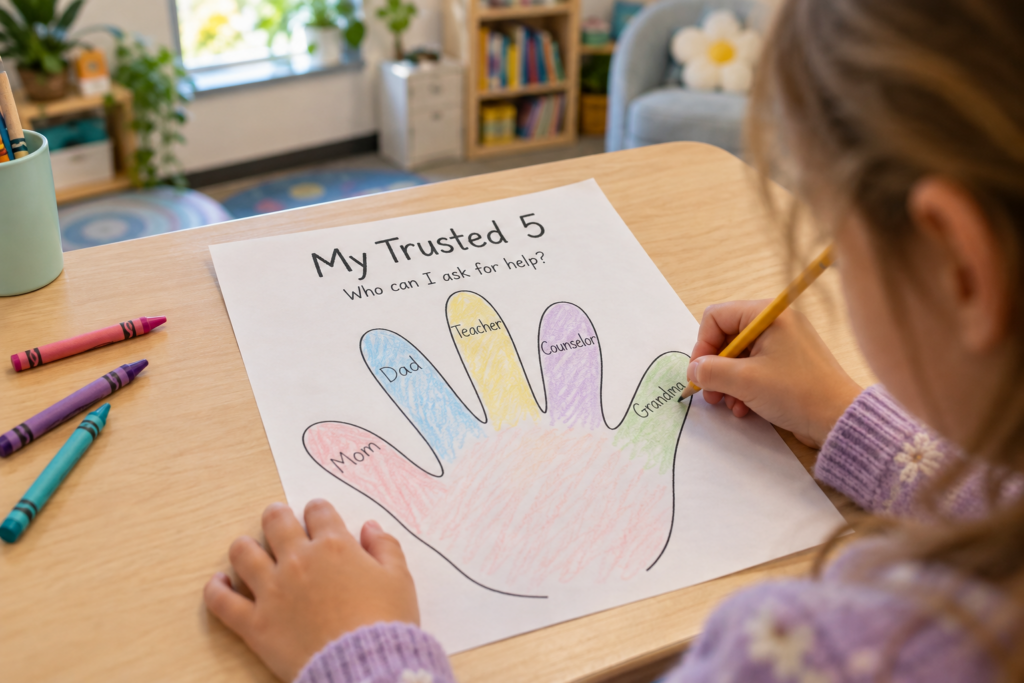
The “Trusted 5” hand activity is a simple starting point. Students trace a hand and write or draw one safe grown-up in their life on each finger. Their list might include a caregiver, teacher, school counselor, school nurse, or another supportive adult.
Explain what makes someone a safe person to approach:
Remember, what may be a safe grown-up for one child may not be a safe grown-up for another child. Our lists should be different and personalized!
Practice asking for help, too. Teach simple phrases like:
Remind students that if one adult doesn’t listen or help, they can keep telling another safe grown-up. And if something has already happened, no matter how long ago, they still deserve help.
“Just say no” is a lot easier to say than to do, especially when you’re a child who wants to fit in or avoid confrontation.
Give students simple words they can practice:
Pair the words with an action: say no, move away, and find a safe grown-up.
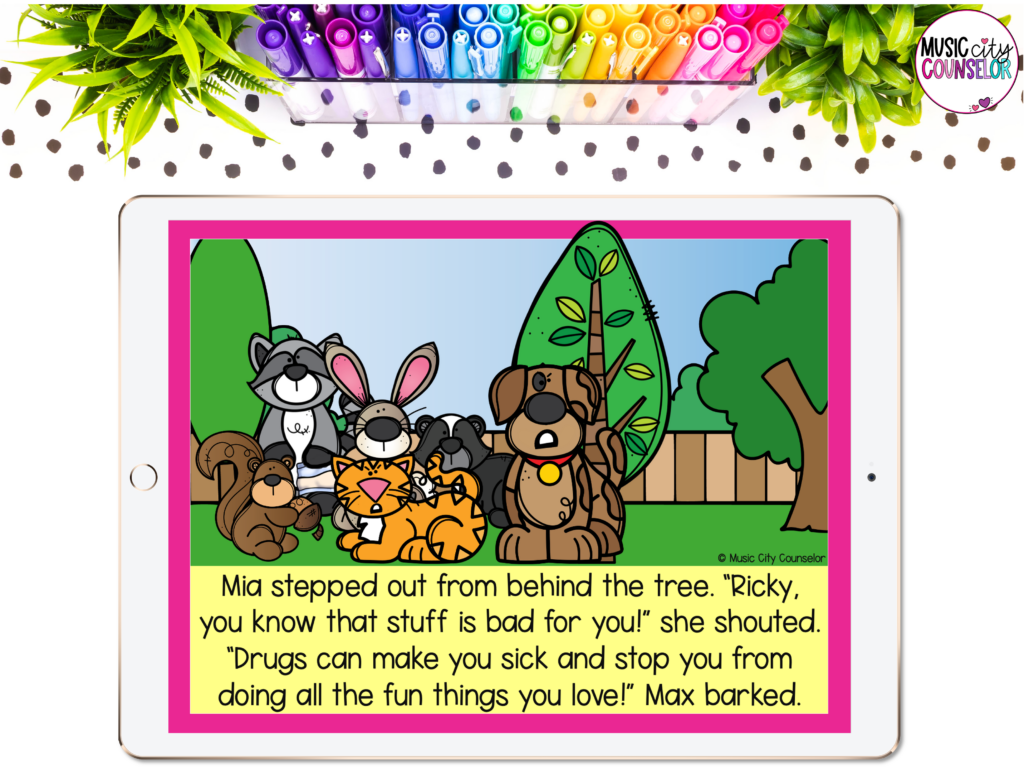
To teach refusal skills in an elementary-friendly way, I use this story that encourages kiddos to keep their “Paws Off Drugs.” It tells the story of Max the dog and Mia the cat, and the choices they make when Ricky the Raccoon offers them drugs.
After the story, students love decorating their own dog or cat with ways they keep their “Paws Off Drugs.” Their crafts make the cutest bulletin board!
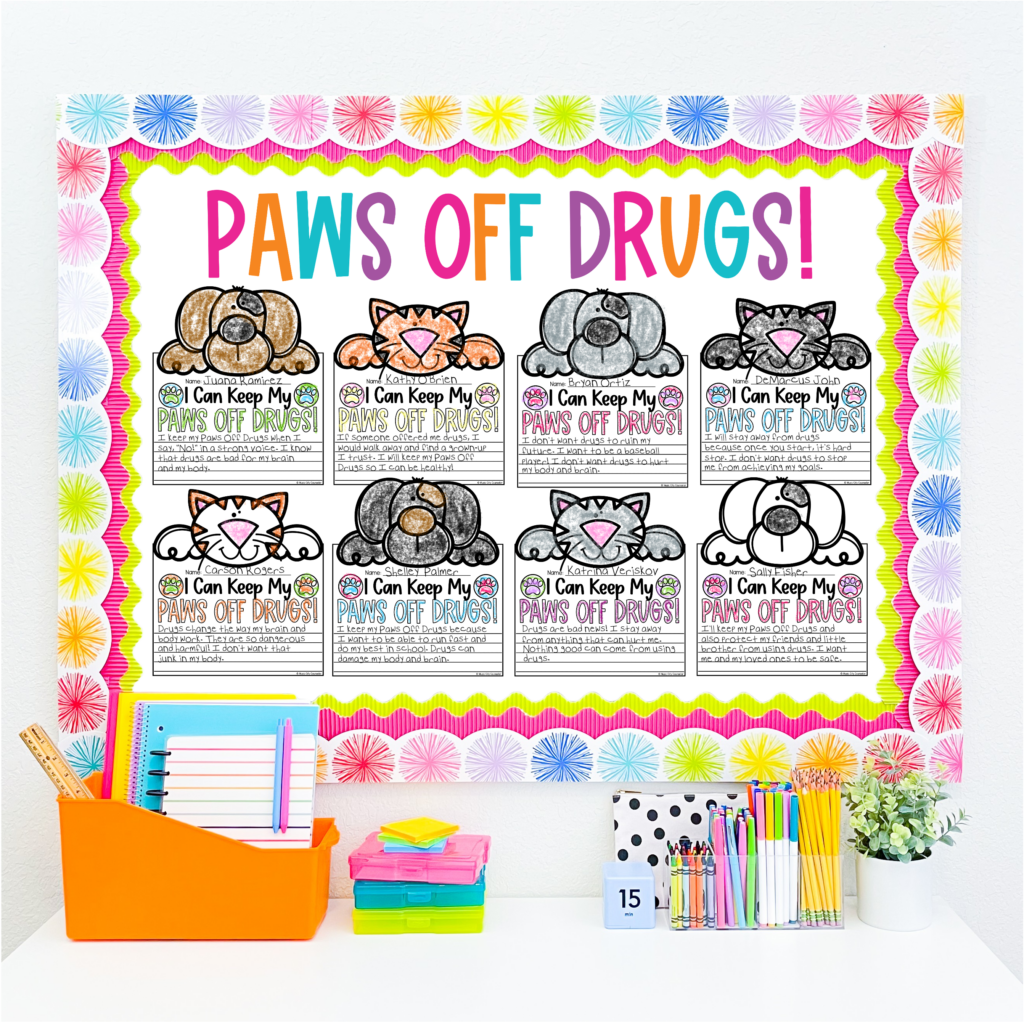
To close the lesson, students sign a “Paws Off Drugs” Pledge. I love displaying these in the main hallway of our school as part of our Red Ribbon Week Celebration.
For the older crowd (5th – 8th grades), I created this set of comic strips and fact sheets that focus on drug awareness and prevention.
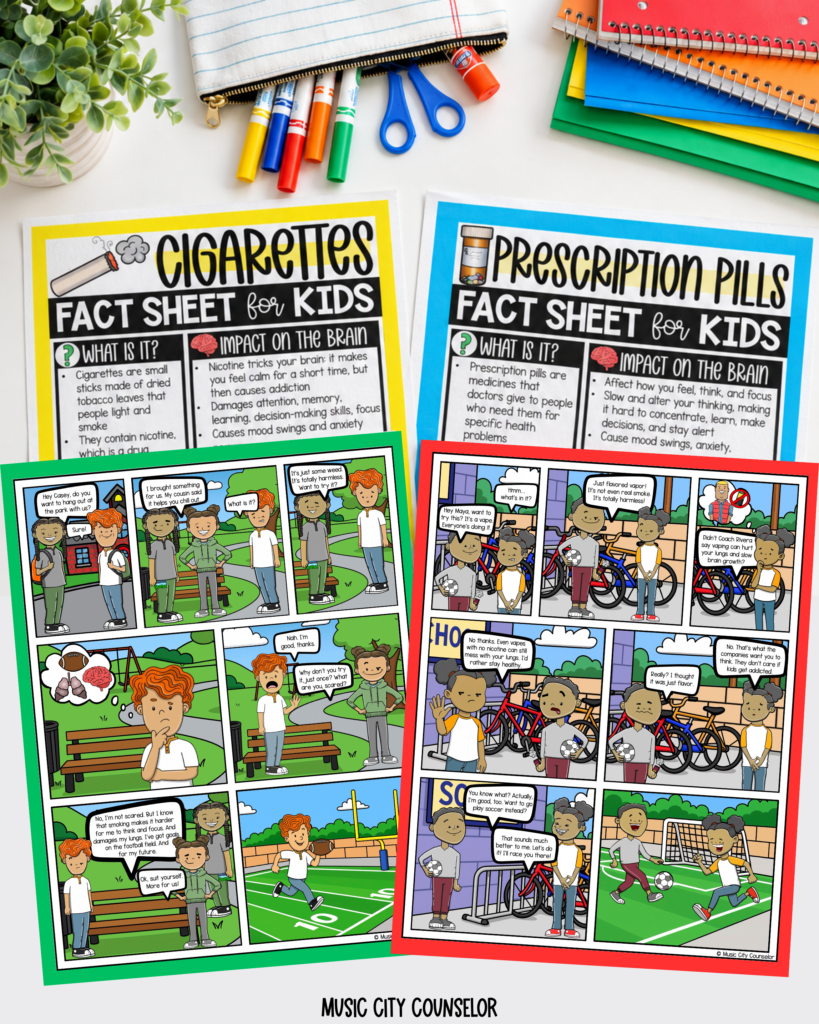
They teach upper elementary and lower middle school friends about the dangers of cigarettes, vaping, marijuana, prescription pills, and alcohol. Students learn what each substance is, its impact on the brain and body, and how/why to say, “no” to peer pressure.
Then, we close the lesson by letting students create their own comic strips! Because…comics make everything more fun and relatable!
A good read-aloud and a little practice can make your Red Ribbon Week lessons feel concrete and approachable! Choose stories about making safe choices, asking for help, and handling peer pressure. Your book doesn’t even have to mention drugs or substances to support these important conversations.
Here are a few books to consider:
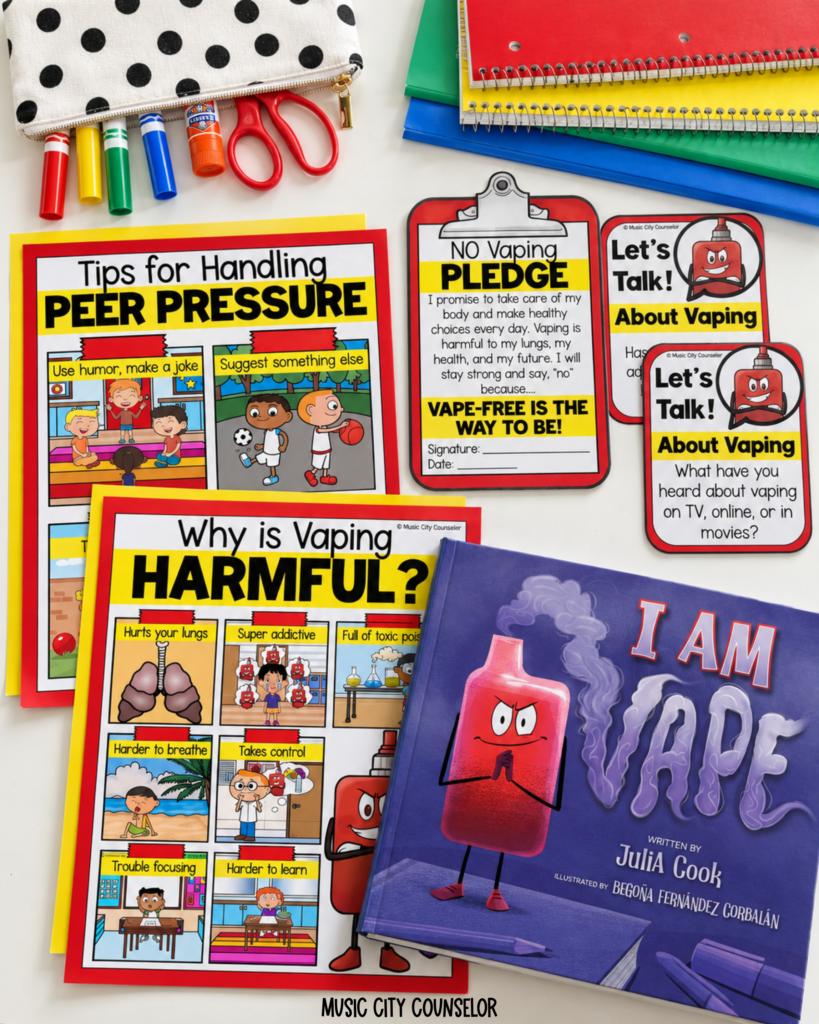
Another favorite book for Red Ribbon Week is “I Am Vape” by Julia Cook. It does an amazing job of making the dangers of vaping and tobacco little-kid-friendly. Starting these conversation early, and continuing them as kids grow, helps kids understand the risks and prepare to make healthy choices as they grow up.
My lesson, and the book, teach students:
Pair these read-aloud books with real-world scenarios and role plays:
Model a short response, such as, “No thanks. I’m going to ask an adult,” and let students practice saying it, moving away, and finding help. Puppets, picture cards, and partner practice can make this feel playful and manageable.
Keep the focus on building confidence: “You can ask questions, say no, and get help when you need it!”
Caring for our bodies also includes learning what to do when big feelings show up.
Use Red Ribbon Week to introduce or revisit coping strategies such as:
Let students practice rather than simply naming the strategies. Take a short movement break together. Model a helpful thought such as, “I can ask for help,” or “I can take this one step at a time.”
Then invite students to make a small coping plan:
“When I feel __________, I can try __________. If I need support, I can talk to __________.”
Coping skills give children constructive ways to respond to stress and seek support.
Remind students that different strategies work for different people. They can try another tool or ask for help when something isn’t working.
The message we want students to leave with is: “I have people who can help me, and I can practice keeping myself safe.”
Keep your tone calm, practical, and hopeful. Avoid graphic examples, frightening predictions, or language that labels people as “good” or “bad.”
Remember that some students may have loved ones affected by substance use. Those children need compassion and reassurance. They should never feel responsible for an adult’s choices or believe that asking for help means betraying their family.
Helpful messages include:
And remember, you can still bring fun into the week! Connect spirit days to a practical skill: identify your support team on team-shirt day, practice a coping strategy during morning announcements, or invite students to draw one healthy choice they want to practice.
Give teachers and caregivers a few of the same phrases to reinforce. A short prompt like, “Who could you ask if you weren’t sure something was safe?” can help continue the conversation at home.
Your Red Ribbon Week doesn’t have to be elaborate to be meaningful. A few clear messages, supportive conversations, and opportunities to practice can give students skills they can use well beyond the celebration!
