






When children can say, “I feel nervous because I have a spelling test,” instead of acting out, it’s a game-changer. Am I right?!
Understanding and naming emotions is a key building block for social-emotional learning. When children can identify their feelings, they are better equipped to manage their behavior, express themselves clearly, and build positive relationships!
Here’s a step-by-step guide to make teaching feelings identification fun, engaging, and developmentally appropriate for your students.
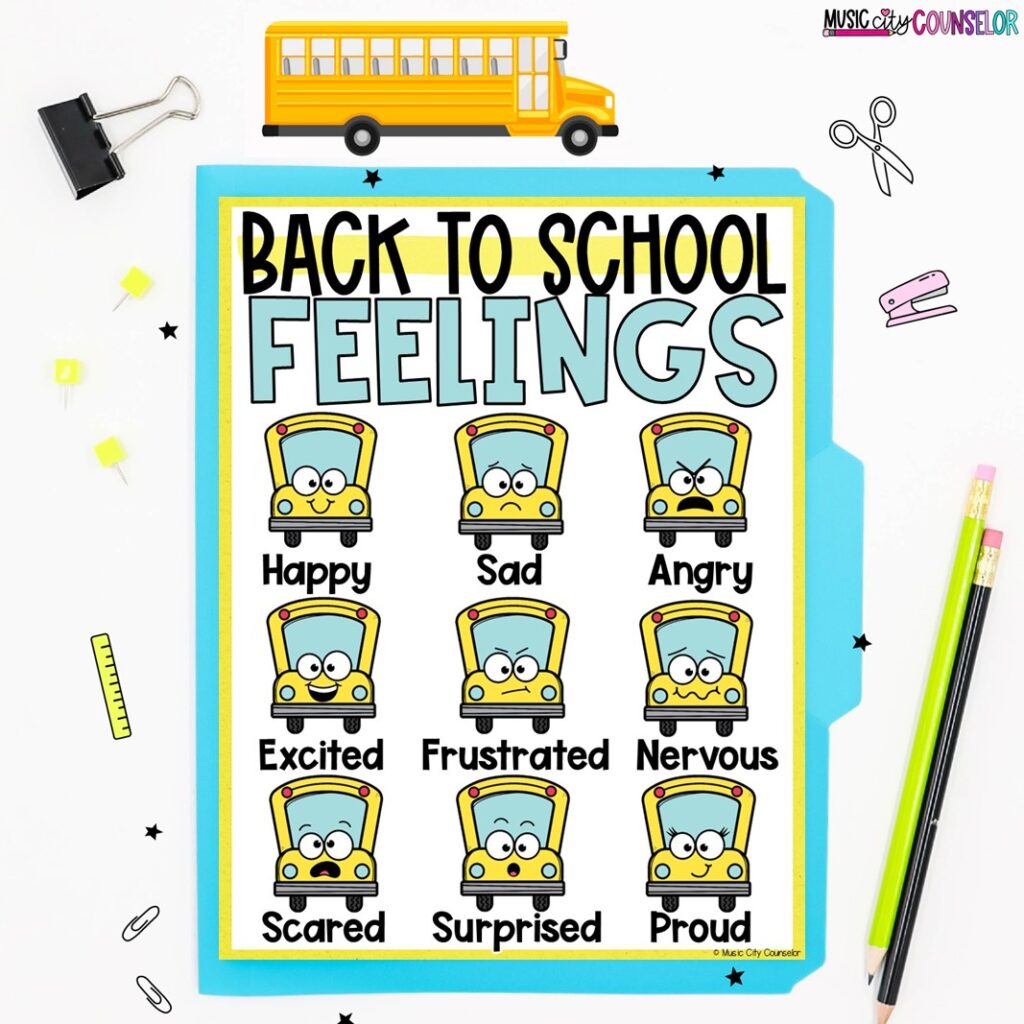
Use rich visuals to make abstract concepts like feelings more concrete for little learners. Feelings charts and posters make emotions come to life!
Consider visuals with real photographs of children and visuals with cartoon or clipart images. Let’s talk through the pros of each one.
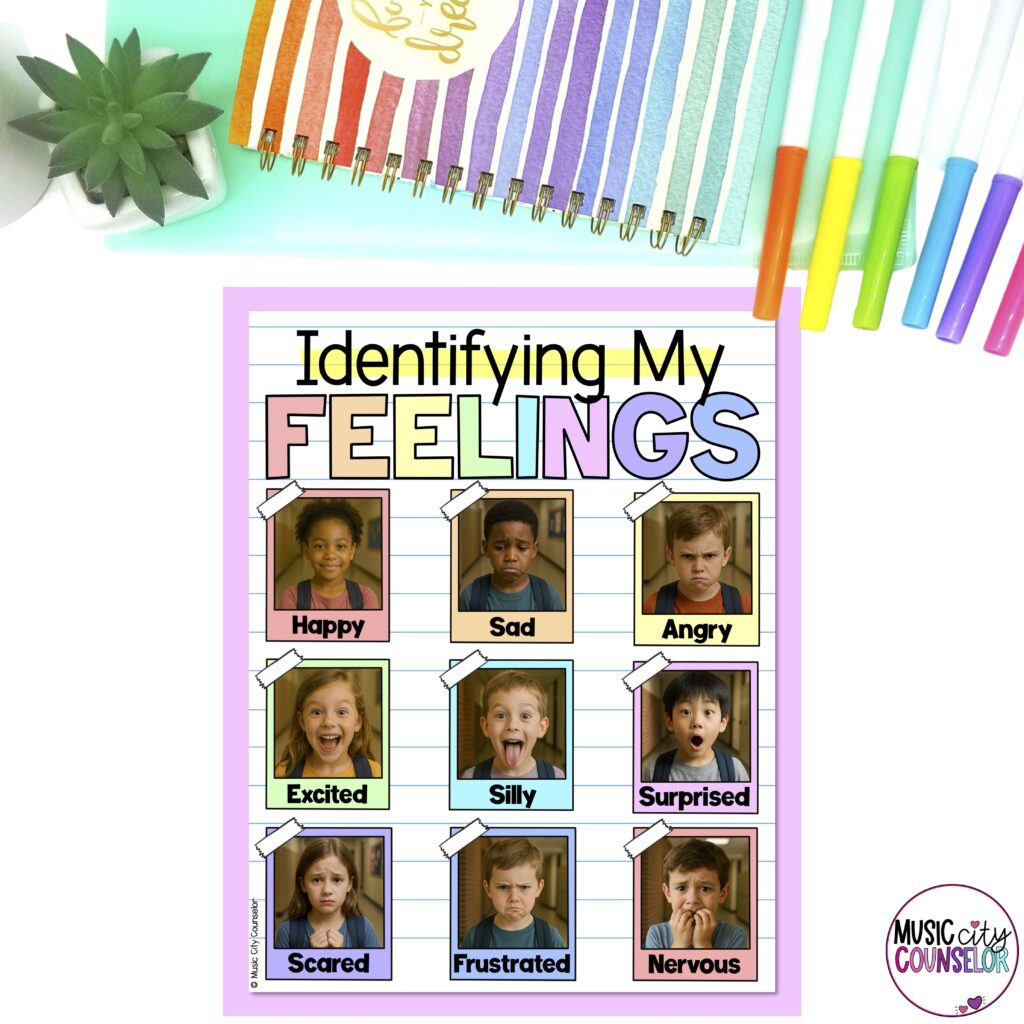
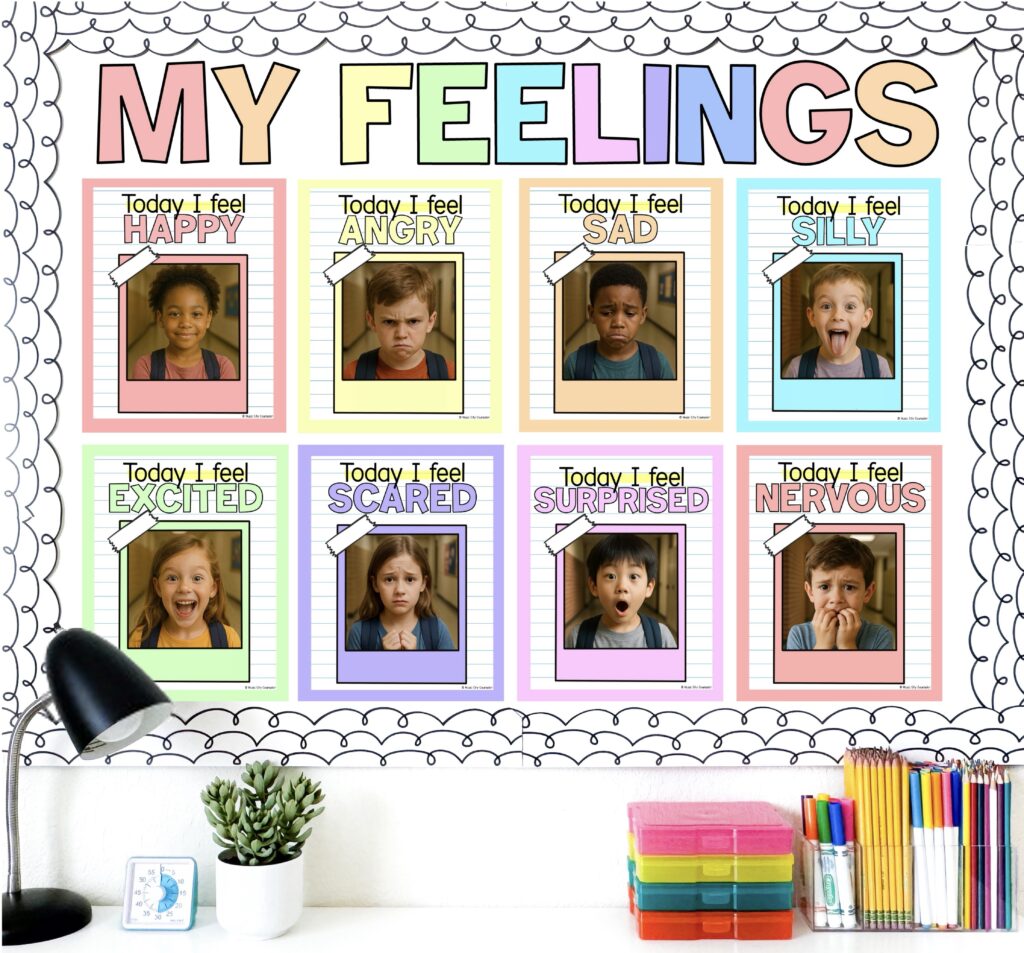
Depending on your population of students and their needs, photographs of real children may connect with them best.
Here’s why real photos work:
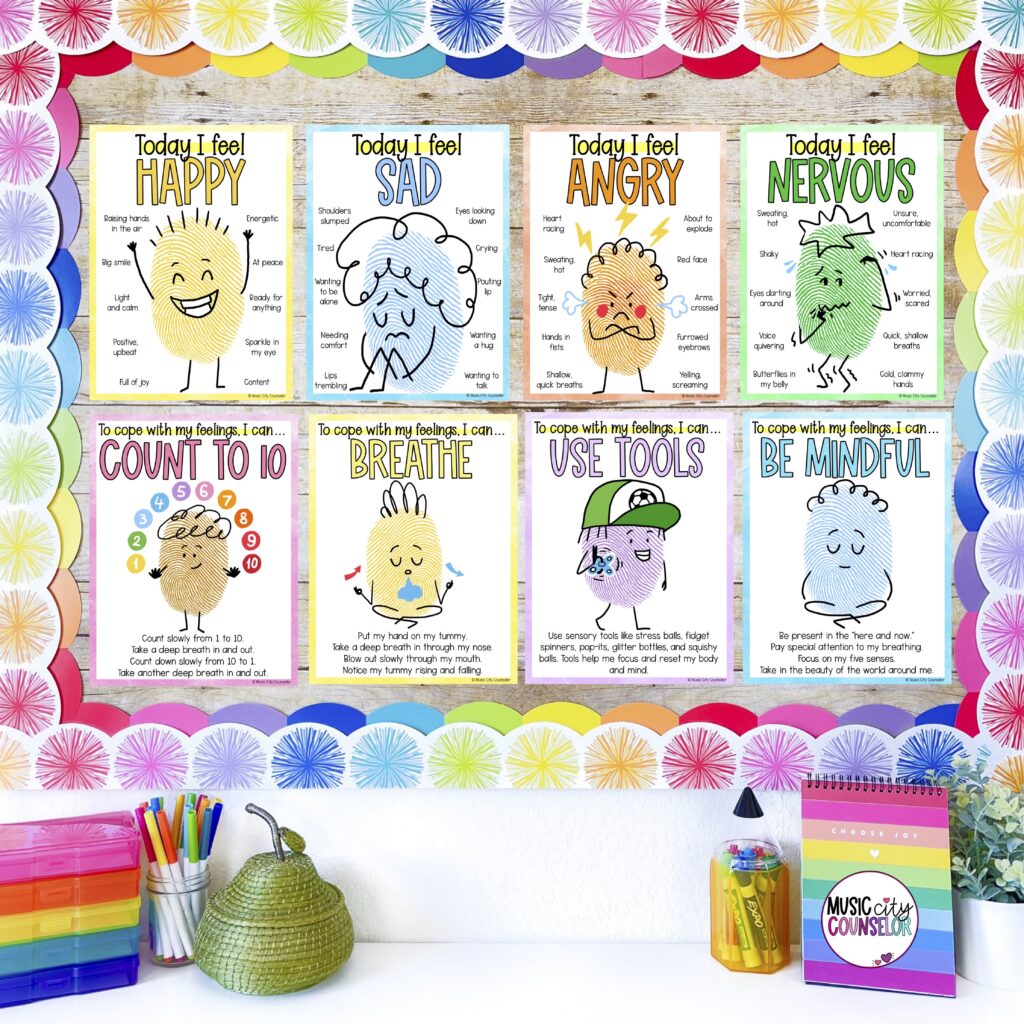
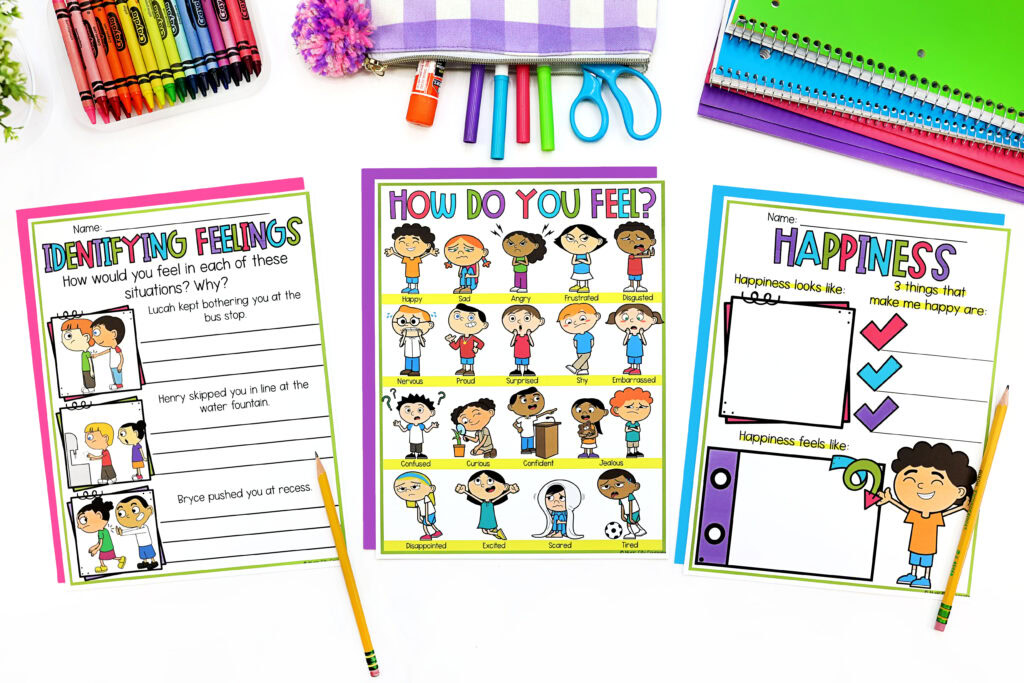
While real photos have their advantages, cartoon and clipart images are also a powerful tool to teach feelings identification to children.
Here’s why clipart images work:
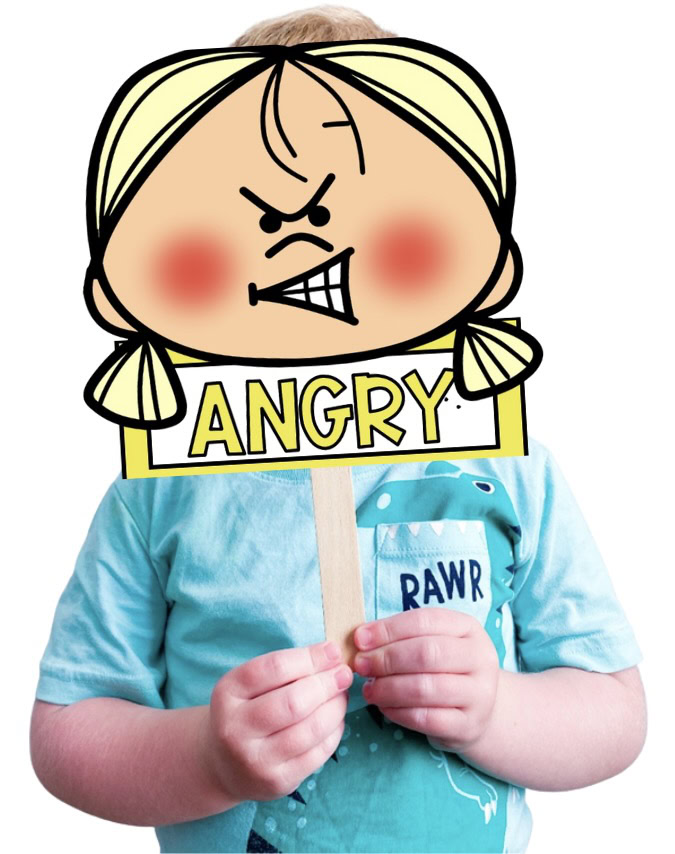
A fun way to incorporate cartoon emotions faces into your counseling practice is to glue them onto craft sticks! This makes the learning process interactive and lends itself super well to role-playing activities.
Feelings don’t just live in our minds, they also show up in our bodies. By teaching kids to notice their body signals, we give them an extra tool to recognize and manage their emotions before they grow too big to handle.
Teaching students to notice and recognize the signs of different emotions in their bodies is critical because:
Start with a simple explanation:
“Our bodies give us clues about how we’re feeling, kind of like secret messages. When you know how to read those clues, you can understand your feelings better and make good choices.”
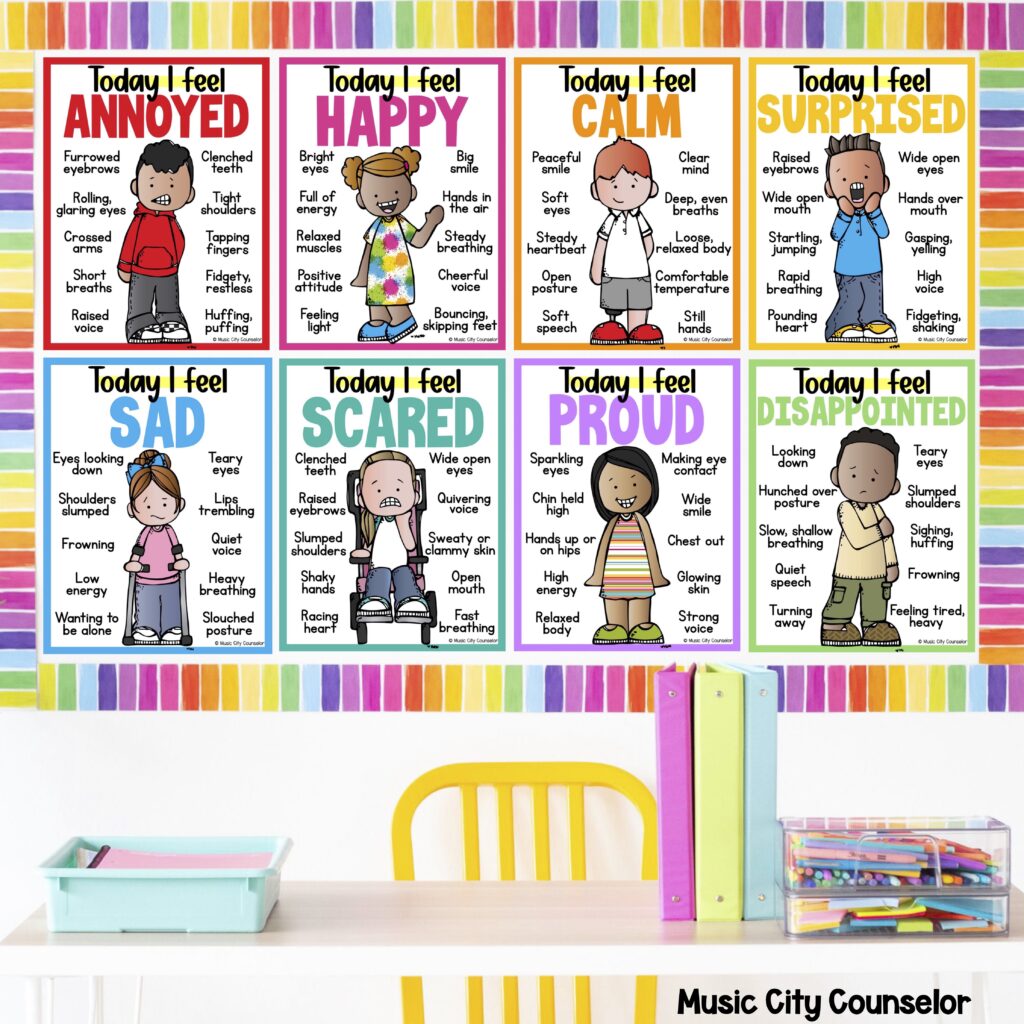
Then, teach body clues for the primary emotions:
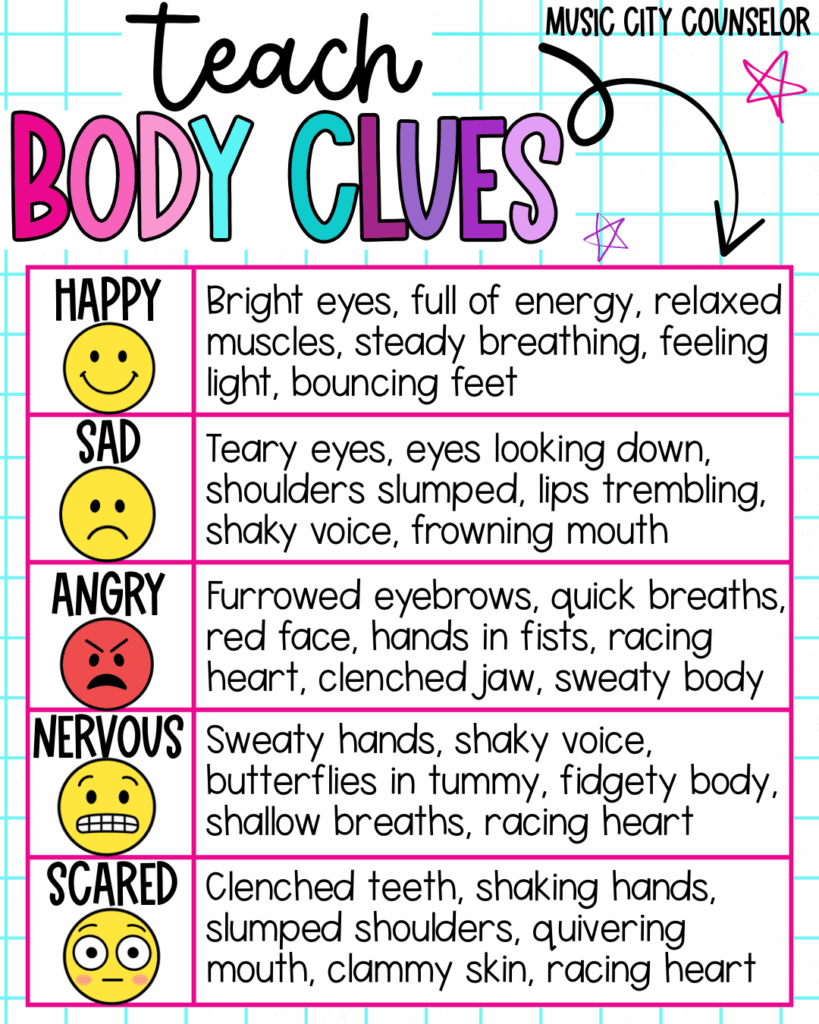
Try using rich visuals like these colorful posters:
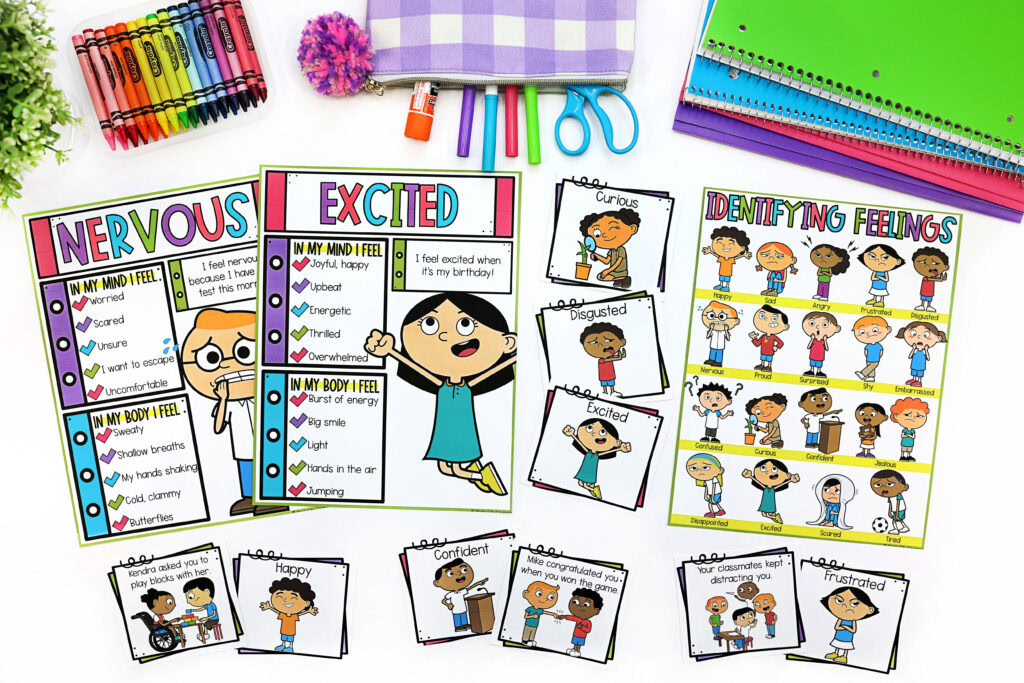
And this engaging lesson:
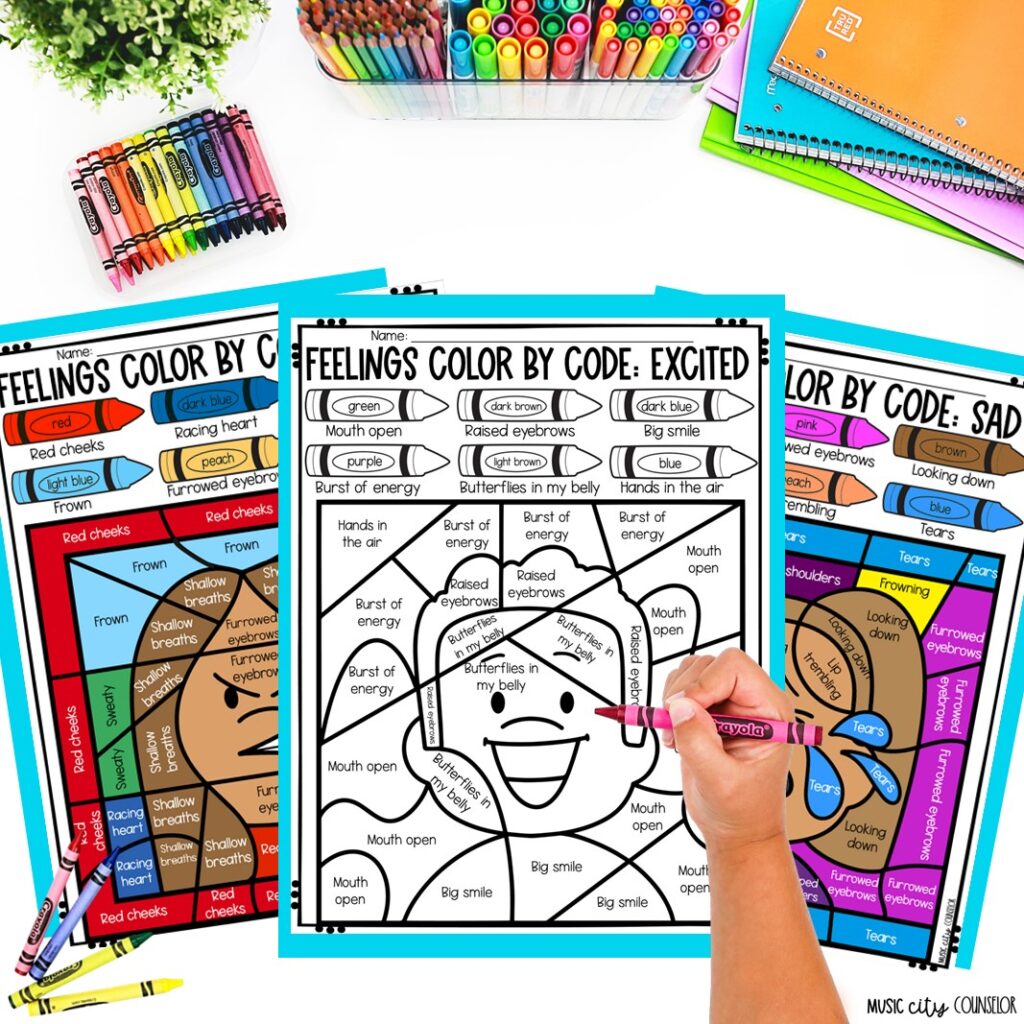
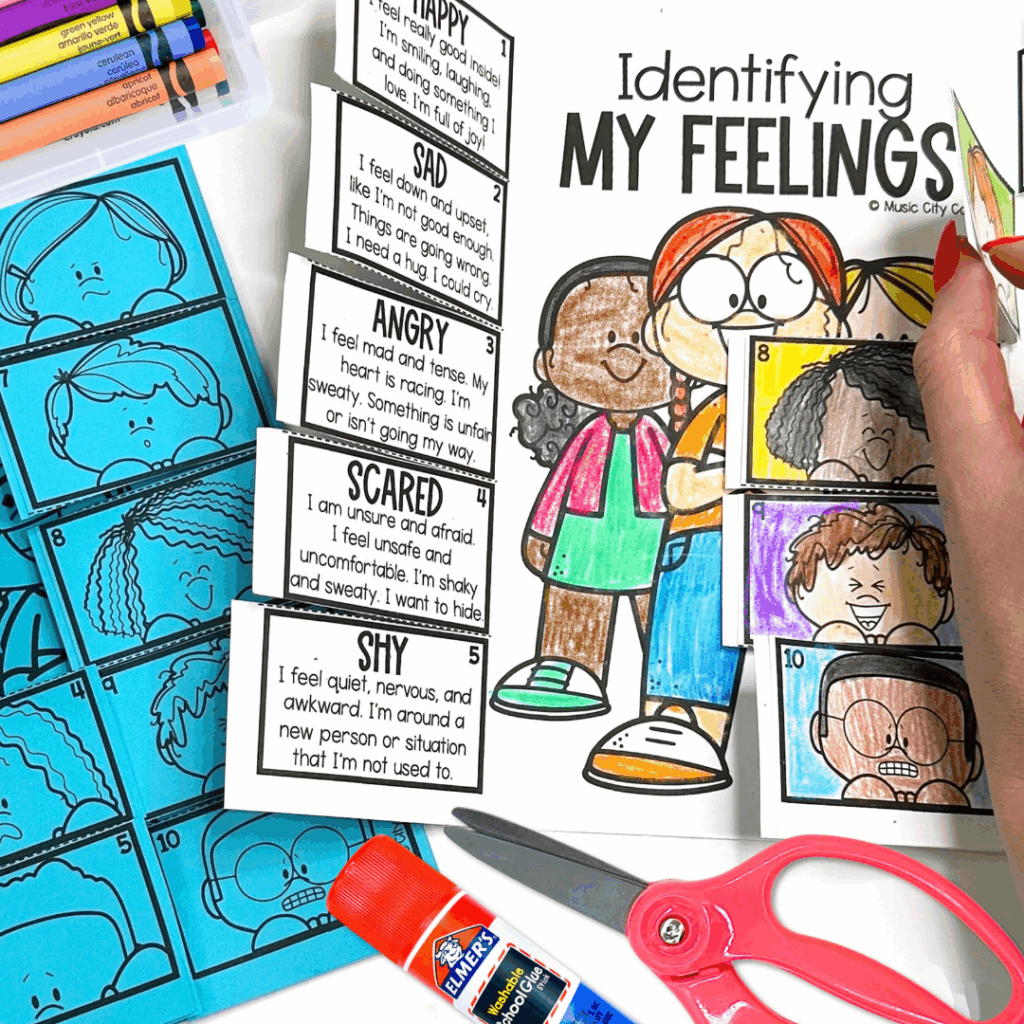
Use hands-on activities like color-by-code activities and folded crafts to engage kids through play while reinforcing SEL concepts. These fun, no-prep activities make learning interactive and give students a safe, low-pressure way to explore emotions while staying focused and calm. Plus, when kids are creating, they’re more likely to open up and talk about their feelings naturally, which builds connection and understanding.
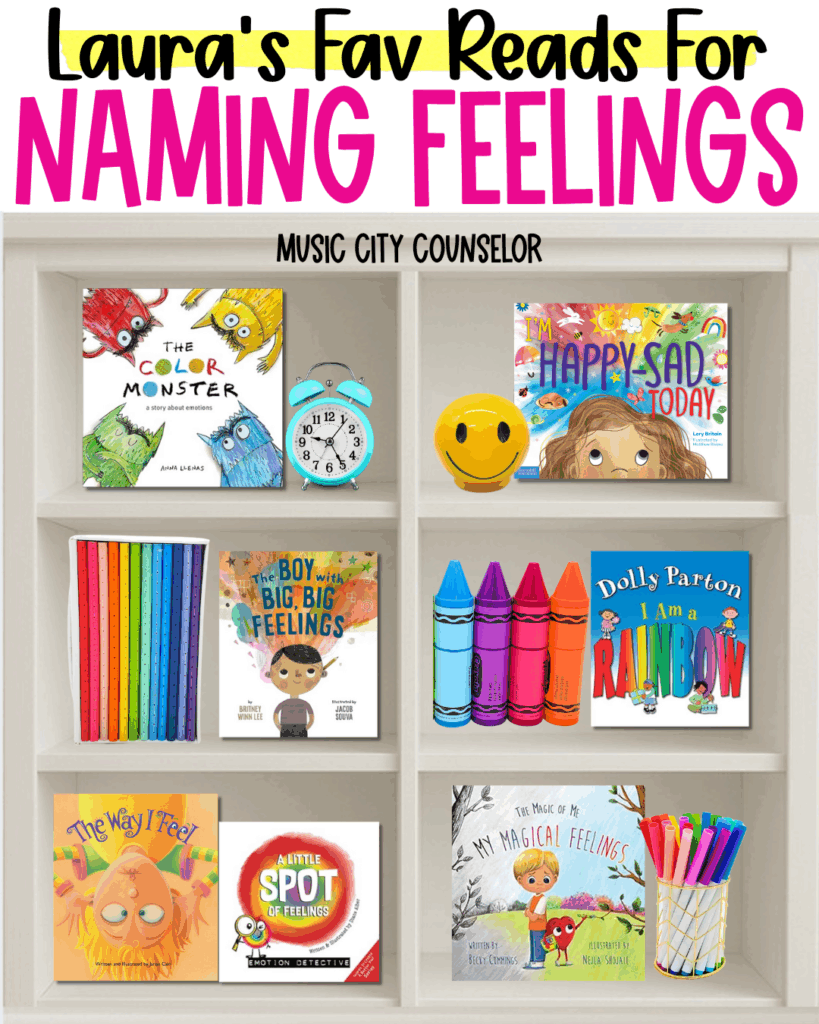
Story books are another impactful way to explore emotions in a safe context. Here are 7 of my favorite books that teach feelings identification: (Amazon Affiliate Links)
Teaching feelings identification lays the foundation for self-regulation, problem-solving, and healthy relationships. By using visuals, stories, body awareness, and interactive activities, you empower your students to understand their inner world and express themselves confidently.
What are your favorite ways to teach your students to name their feelings? Please share in the comments below, I’d love to hear from you!

You may also be interested in: