





Earn 4.00 Reward Points
$4.00
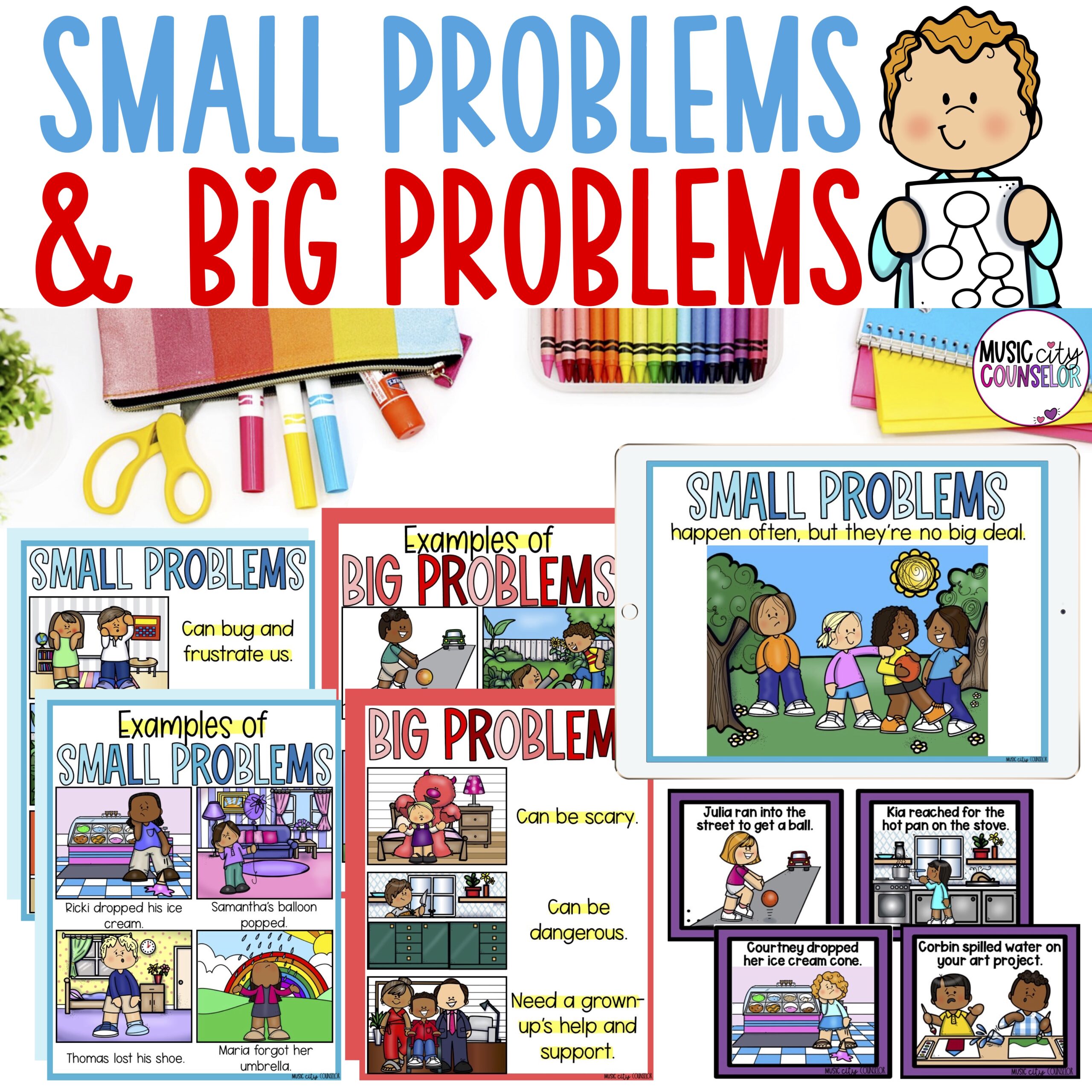
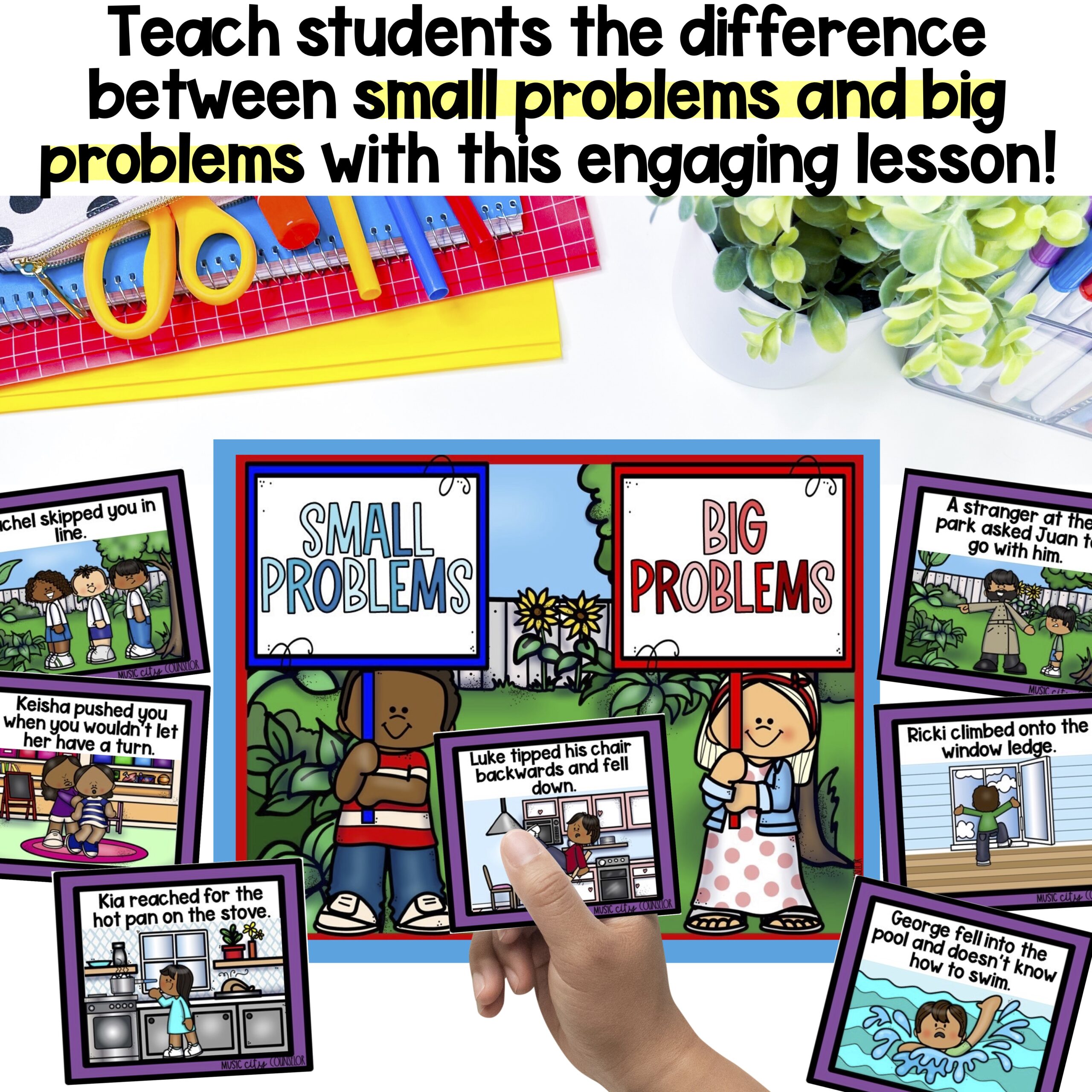
This engaging lesson teaches students the difference between small problems and big problems.


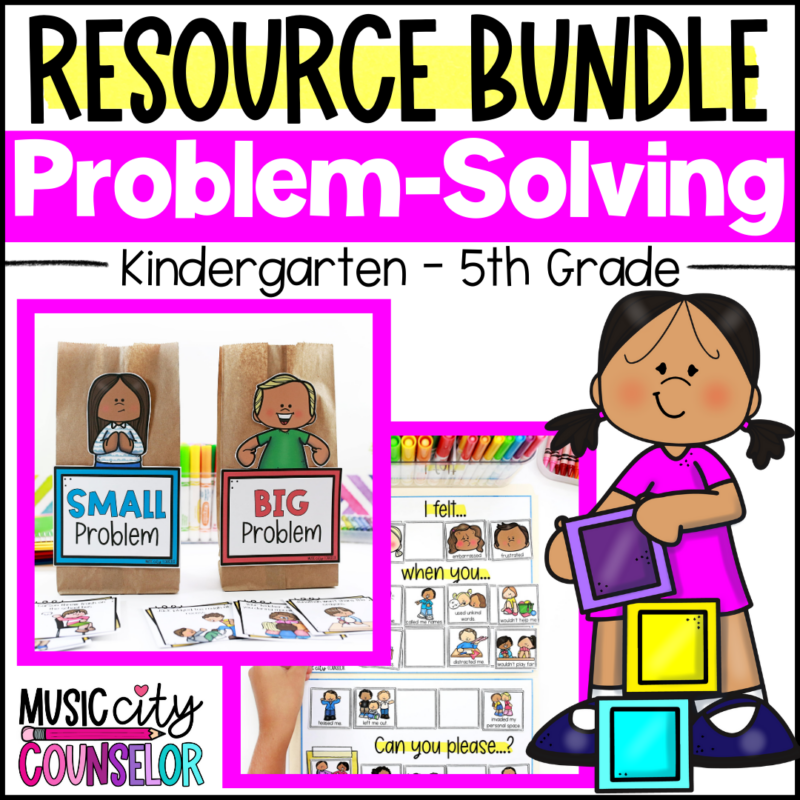
This engaging lesson teaches students the difference between small problems and big problems.
✨ Students learn to identify small problems that they can solve themselves, and big problems that need a grown-up’s support.
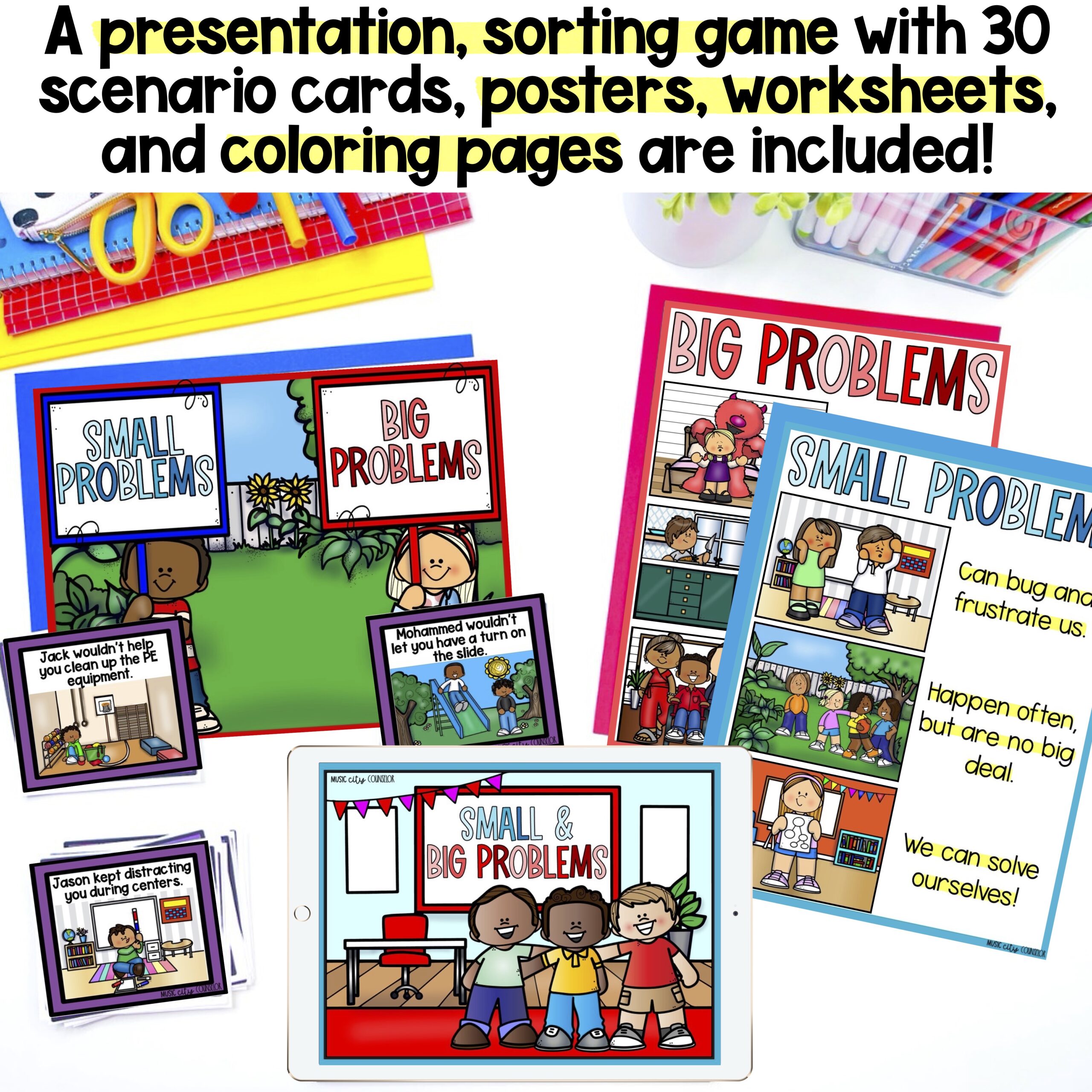
❤️ Lots of real-life scenarios are included for size of the problem practice!
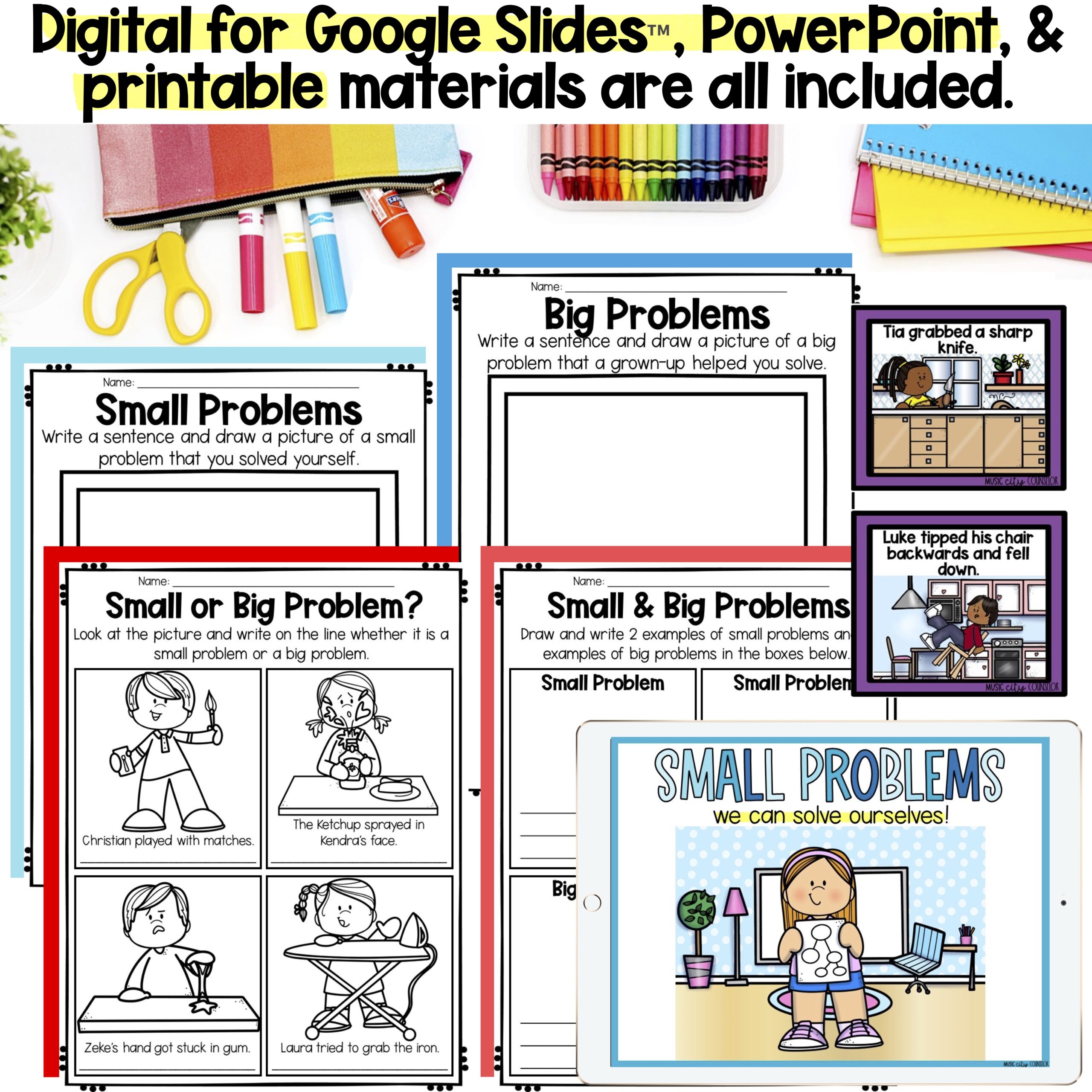
✅ THIS RESOURCE INCLUDES:
⭐⭐⭐⭐⭐
“This resource was amazing! My students enjoyed looking at the picture and explaining if this was a big problem or small problem and why. Thank you so much!” – Nikki K.
⭐⭐⭐⭐⭐
“Use this every year to help students understand what is important to report and what they need to solve on their own. Paired with some problem solving skills it helps young learners develop independence with peer conflict.” – Johanna M.
⭐⭐⭐⭐⭐
“I love the resources by Music City Counsellor! Her social stories are some of my favourites. I find them so clear and easy for my Kindergarten students to understand. When problem-solving became an issue in my class, she was the first person I thought of to look to for support. Her resources gave me a great way to help my students work through these challenges and learn important problem-solving skills. Thank you for your creativity and for creating resources that help our students learn and grow!” – Teaching Small Hearts
⭐⭐⭐⭐⭐
“This was a very helpful SEL resource for teaching the “size of the problem” concept! My students quickly understood the difference between small and big problems thanks to the clear visuals and examples. It led to great class discussions and gave students a concrete way to think about appropriate reactions and solutions. Easy to use, engaging, and a valuable addition to our social-emotional learning routine.” – Kirstie S.
⭐⭐⭐⭐⭐
“We were still having trouble distinguishing Big/Little problems this year, so I began reviewing this occasionally at Circle Time. Now when I get tattling, I just ask “Is this a Big Problem or Little Problem?”. Answer: it’s usually always a Little Problem, and they realize by answering me that they have the power to use our Problem Solving Solutions that we have reviewed and are posted on the wall.” – Laurel B.
⭐⭐⭐⭐⭐
“This was a very engaging resource that my kids truly loved! Thank you for creating this!” – Krissy H.
⭐⭐⭐⭐⭐
“It is very colorful and boosts my students moods to learn. This is a wonderful addition to my social emotional activities.” – Dana J.
⭐⭐⭐⭐⭐
“This resource was amazing! My students enjoyed looking at the picture and explaining if this was a big problem or small problem and why. Thank you so much!” – Nikki K.
⭐⭐⭐⭐⭐
“This is full of resources that you can us in a variety of ways!” – Taylor C.
⭐⭐⭐⭐⭐
“Use this every year to help students understand what is important to report and what they need to solve on their own. Paired with some problem solving skills it helps young learners develop independence with peer conflict.” – Johanna M.


| Cookie | Duration | Description |
|---|---|---|
| cookielawinfo-checkbox-analytics | 11 months | This cookie is set by GDPR Cookie Consent plugin. The cookie is used to store the user consent for the cookies in the category "Analytics". |
| cookielawinfo-checkbox-functional | 11 months | The cookie is set by GDPR cookie consent to record the user consent for the cookies in the category "Functional". |
| cookielawinfo-checkbox-necessary | 11 months | This cookie is set by GDPR Cookie Consent plugin. The cookies is used to store the user consent for the cookies in the category "Necessary". |
| cookielawinfo-checkbox-others | 11 months | This cookie is set by GDPR Cookie Consent plugin. The cookie is used to store the user consent for the cookies in the category "Other. |
| cookielawinfo-checkbox-performance | 11 months | This cookie is set by GDPR Cookie Consent plugin. The cookie is used to store the user consent for the cookies in the category "Performance". |
| viewed_cookie_policy | 11 months | The cookie is set by the GDPR Cookie Consent plugin and is used to store whether or not user has consented to the use of cookies. It does not store any personal data. |